Showing posts with label hunter insurance. Show all posts

Tuesday, April 12, 2016

Airbag Defect Leads to Largest Auto Recall in US History

Hunter Insurance is committed to keeping policyholders informed on the latest news that could affect your safety. 

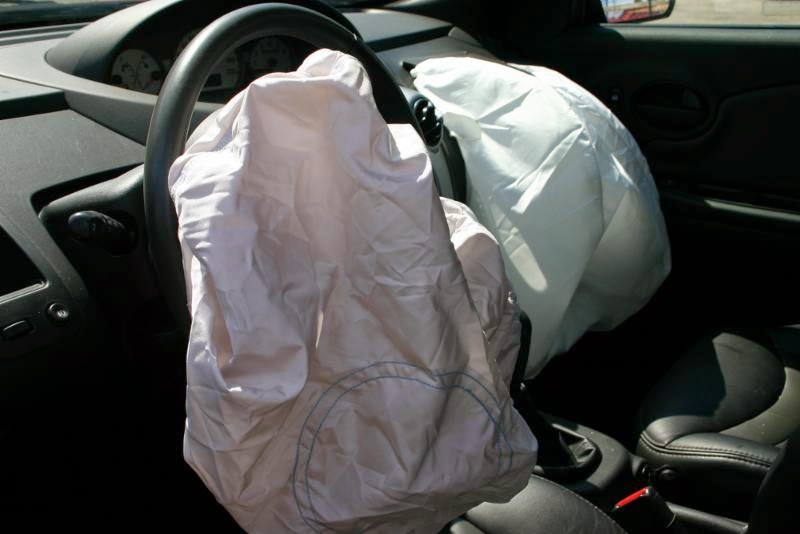
If you remember, last year the Japanese company Takata Corporation issued a recall of approximately 34 million vehicles due to faulty air bags. This is the largest auto recall in our country's history, with Takata airbags already linked to 10 known deaths in the U.S. and 11 worldwide, with over 100 injuries.

The issue is that the chemical that inflates the air bags can explode with too much force, blowing apart a metal inflator and sending shrapnel into the vehicle. Eleven automakers, including Honda Motor Co. and Toyota Motor Corp., have recalled 17 million vehicles in the U.S. and more than 36 million worldwide because of the problem.

According to SafeCar.gov, the manufacturers include:
  • BMW 
  • Chrysler 
  • Daimler Trucks 
  • Ford 
  • General Motors 
  • Honda 
  • Mazda 
  • Mitsubishi 
  • Nissan 
  • Subaru 
  • Toyota 
The National Highway Traffic Safety Administration (NHTSA) has created some online resources to help consumers whose vehicle may have a defective air bag made by Takata. 

The list of affected vehicles by priority group for repairs can be found: here.

How to Check

The NHTSA recommends people enter their Vehicle Identification Number (VIN) at this website: https://vinrcl.safercar.gov/vin/.

Should you have any additional questions please call Hunter Insurance at 769.9500.

Friday, January 22, 2016

Roof Rakes Make Removing Snow Safe and Timely

Snow removal can be both physically exhausting and time consuming. With many indicators pointing towards another season of higher than average snowfall, preparation is more important than ever. Having the proper tools goes a long way in preventing potential dangers such as ice dams and physical harm. Owning a roof rake offers a safe alternative to stepping foot onto your roof. Not only that, it is also a cost efficient and worthwhile investment that will last you for several winters to come.

Roof rakes come in a variety of different styles and sizes to accommodate your specific needs. Sizes can range anywhere from ten feet to thirty feet in length. The large size allows for a roof rake to reach almost anywhere on the surface of your roof. This allows for easy movement and eliminates the need for a ladder in order to get onto your roof. Depending on the structure of your house, there are roof rakes designed to clean specific areas such as shingles or gutters. You can also purchase a roof rake with different tips that include everything from a simple shovel to jagged edges. It is important that you are aware of any electrical wires on the roof of your home, and that you steer clear of them while you are cleaning off the roof.

Unfortunately, last year even some of the most proactive homeowners were unable to clear their roofs due to the high demand and low supply of roof rakes. If you are wondering where to purchase a roof rake, they are carried at most hardware stores and home improvement centers. Roof rakes can also be purchased online and can be shipped quickly in the event of a rapidly approaching snowstorm. At Hunter Insurance, we strongly urge you to use extreme caution when cleaning your roof. A roof rake is a great way to ensure that you are as safe as possible.

For more information on safeguarding your home this winter, call Hunter Insurance at 401-769-9500.

Friday, January 15, 2016

Remember to Regularly Check Your Tire Pressure This Winter

During the winter months, slippery roads and snowfall should not be your only concerns when driving. Did you know that the weather can also affect the pressure in your tires? As the temperature outside the tire changes, it will affect the pressure inside the tire, which is why you may see your tire pressure light come on more often during the colder months.

When it gets cold outside, tires that are underinflated create safety concerns such as increased braking distance and reduced steering capability. Over the course of winter, underinflated tires lead to a decrease in gas mileage and will wear out quicker than normal. Now that winter has arrived, keeping track of your tire pressure should be a top priority.

As a rule of thumb, you should check your tire pressure at least once a month. If you notice any dramatic changes in pressure, you should inspect your tires immediately. Your vehicle’s recommended tire pressure can be found in your owner’s manual or on your vehicle’s doorjamb. If you cannot find it, check your manufacturer’s inflation pressure guide or consult a local tire specialist. Most new vehicles are equipped with tire monitoring systems that will indicate any issues. If your vehicle is an older model, it is your responsibility to stay alert.

Regardless of your model, it is crucial to recognize underinflated tires and to manually check tire pressure. It is important to note that as you drive your car, friction causes the tires to heat up, increasing the pressure within the tire. Checking the tire pressure after you have been driving may give inaccurate, misleadingly high pressure readings.

Hunter Insurance reminds you to drive safe this season. If you have any further questions or concerns about proper vehicle safety, visit us at www.hunterinsuranceonline.com or call 401-769-9500.

Tuesday, July 21, 2015

Finding the Right Type of Business Insurance


As a business owner, your top priorities are protecting your employees and the future of your company.  You are already aware that your company requires a commercial insurance policy, but do you know exactly what types of coverage your business needs?

At Hunter Insurance, our agents have the knowledge to design a plan that is customized to your business. As a small business ourselves, we know how to address the issues and concerns of similar companies. 

Before you call us to develop a commercial policy, it’s important to learn about the types of coverage available:

  • Key-employee life insurance: If an employee that is essential to your business were to pass away unexpectedly, business-owners can take out a key-employee life insurance policy that will cover the costs incurred from their loss.
  • Liability insurance: This type of coverage provides your business with the financial protection it needs in the event of a lawsuit.
  • Property insurance: The purpose of property insurance for a small business is to provide critical financial assistance in the event of a loss, so that you may continue to operate with as little disruption as possible.
  • Risk management insurance: Risk management provides for various levels of protection for your business, including those that are external and difficult to control. This type of policy will safeguard your business in the event of an accident or injury.
  •  Workers’ compensation insurance: Workers’ compensation insurance assures that injured workers receive medical care and compensation while they are unable to return to work. Additionally, this coverage may protect your business in the event that an employee files a lawsuit if injured while working.
Mitigating risks to your business is not a simple task. The most important step you can take for the future of your company is to purchase a commercial insurance policy through Hunter Insurance. To learn more, call us at 401-769-9500.

Information for this article provided by: Taxation Use of Business Insurance, General Liability Insurance, and III.org.

Thursday, June 11, 2015

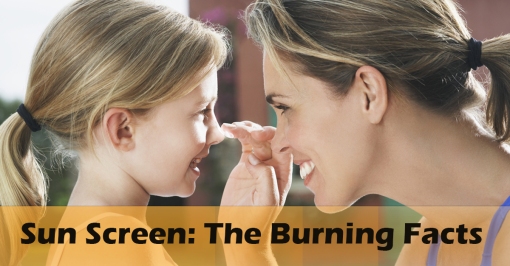
Sun Screen: The Burning Facts


Although the sun is necessary for life, too much sun exposure can lead to adverse health effects, including skin cancer. More than 1 million people in the United States are diagnosed with skin cancer each year, making it the most common form of cancer in the country, but it is largely preventable through a broad sun protection program. It is estimated that 90 percent of non-melanoma skin cancers and 65 percent of melanoma skin cancers are associated with exposure to ultraviolet (UV) radiation from the sun.

By themselves, sunscreens might not be effective in protecting you from the most dangerous forms of skin cancer. However, sunscreen use is an important part of your sun protection program. Used properly, certain sunscreens help protect human skin from some of the sun’s damaging UV radiation. But according to recent surveys, most people are confused about the proper use and effectiveness of sunscreens. The purpose of this fact sheet is to educate you about sunscreens and other important sun protection measures so that you can protect yourself from the sun’s damaging rays.
sunscreen-burning-fb-facts-shutterstock_146596109

How Does UV Radiation Affect My Skin? What Are the Risks?

UV radiation, a known carcinogen, can have a number of harmful effects on the skin. The two types of UV radiation that can affect the skin—UVA and UVB—have both been linked to skin cancer and a weakening of the immune system. They also contribute to premature aging of the skin and cataracts (a condition that impairs eyesight), and cause skin color changes.

UVA Rays
UVA rays, which are not absorbed by the ozone layer, penetrate deep into the skin and heavily contribute to premature aging. Up to 90 percent of the visible skin changes commonly attributed to aging are caused by sun exposure.

UVB Rays
These powerful rays, which are partially absorbed by the ozone layer, mostly affect the surface of the skin and are the primary cause of sunburn. Because of the thinning of the ozone layer, the effects of UVB radiation will pose an increased threat until the layer is restored in the latter half of the 21st century.

The above is an excerpt adapted from the article,
"Sun Screen: The Burning Facts” and from
MerchantsOn-Demand.com.

For more information, please visit www.epa.gov.

Tuesday, April 7, 2015

Protect Your Valuables with Renters Insurance from Hunter Insurance


Due to the recent condo complex fire in our area, Hunter Insurance wants to be certain our policyholders understand the importance of having renters insurance. Though your landlord’s policy may cover certain structural damages, not everything that could happen to your rented living space is protected.

What Does Renters Insurance Cover?
  • Theft – If an asset is stolen from your apartment, renters insurance will replace the value of the item(s) taken, as long as they are listed on your policy. Additional endorsements can also be purchased for events such as identity theft or a loss of income due to not having the item. 
  • Fire – Renters insurance will cover the costs in the event of a fire, including helping to clean or replace items damaged from the accident. 
  • Water Damage - Insurance from your landlord may cover the damage to the building in the event of a pipe burst, etc., but it will not cover damage to your personal belongings. Similar to fire, renters insurance will cover the cost to fix or replace any items that were impaired. 
Does It Cover Anything Else? Renters insurance can also provide against liability in the event that a guest is injured while in the apartment. This type of policy may also cover all charges you obtain if your apartment is unusable for a portion of time (such as finding a hotel or other living arrangements until your apartment is in proper condition).

How Much Does Renters Insurance Usually Cost? This type of policy is extremely affordable. Typically, renters insurance can cost less than one dollar a day, but the amount will vary depending on the type of coverage. Keep in mind that there are precautions you can take to help reduce your costs. For example, many insurance companies will reduce the price of renters’ insurance if you install certain safety features, such as properly working smoke detectors and an alarm system.

If you are currently without renters insurance, we highly suggest you consider adding this type of policy today. Hunter Insurance would be happy to answer any questions you may have and discuss the various types of options we have available. Protecting what matters to you most is our top priority, and our agents are committed to providing you the best possible coverage. Call us today at 401-769-9500 to learn more.


Monday, June 30, 2014

Summer Safety Tips: Prevent Heat Illness


After the long winter we had, we too are looking forward to summer. As you start spending more time outdoors it is important you take the proper precautions to ensure you and your loved one stay safe.

To help protect you and your family this summer, here are some safety tips to avoid heat illness:
  • NEVER leave any children, pets or adults in a closed, parked vehicle.
  • Drink more fluids regardless of your activity level. Don’t wait until you’re thirsty to drink.
  • Don’t drink liquids that contain caffeine, alcohol, or large amounts of sugar–these actually cause you to lose more body fluid.
  • Electric fans may provide comfort, but when the temperature is in the high 90s, fans will not prevent heat-related illness. Taking a cool shower or bath, or moving to an air-conditioned place is a much better way to cool off.
  • Wear lightweight, light-colored, loose-fitting clothing.
  • Although any one at any time can suffer from heat-related illness, some people are at greater risk than others—infants, young children, people age 65 and over, people who have a mental illness, and people with health conditions such as heart disease or high blood pressure.
  • Visit adults at risk at least twice a day and closely watch them for signs of heat exhaustion or heat stroke. Infants and young children, of course, need much more frequent watching.
Call Hunter Insurance at 401.769.9500, for more helpful tips on keeping safe this summer.

Tuesday, June 17, 2014

Hunter Insurance Commemorates 25th Anniversary with Donation to Mothers Against Drunk Driving Rhode Island


Lincoln, Rhode Island – Brian Hunter, president of Hunter Insurance, was pleased to make a donation of $500 to Mothers Against Drunk Driving Rhode Island (MADD-RI). The check presentation was made on June 12th to Gabrielle Abbate, executive Director of MADD-RI at the MADD-RI office in Providence.

In celebration of their 25th year in business, Hunter Insurance has renewed its commitment to actively support local charities.  Brian Hunter, a former Rhode Island state senator, has dedicated much of his personal time to helping the community, and has served on the boards of numerous charitable organizations.

During the month of May, Hunter Insurance organized a social media campaign, where every “like” Hunter Insurance received to its Facebook page, the agency donated $5 to MADD-RI.

“I have worked closely with MADD-RI for many years,” said Brian Hunter.  “The work they do to help protect our community is admirable, and this donation is a token of our appreciation for all of MADD-RI’s efforts to stop drunk driving and ensure the safety of our loved ones.”

“We are so grateful to Hunter Insurance for their generosity,” said Gabrielle Abbate. “At MADD, we rely heavily on private donations to keep our organization running. This donation will help us to continue providing vital services and awareness programs to our community at no cost.”

About Hunter Insurance 

Located at 389 Old River Road in the Manville section of Lincoln, Hunter Insurance has provided a full range of personal and business insurance lines for over 25 years.  An independent Trusted Choice agency, Hunter Insurance has twice earned the Five Star Award of Distinction.  The Five Star designation is awarded to top New England agencies that have achieved 17 key performance standards including customer focus, management, human resources, products and services and processes.

For more information contact Brian Hunter at Hunter Insurance, 401-769-9500 or visit the agency’s website www.hunterinsuranceonline.com.


Monday, June 9, 2014

Teen Drugged Driving: The Scope of the Problem


Americans are well aware of the terrible consequences of drunk driving and are familiar with the many successful drinking and driving awareness campaigns. With the dramatic increase of handheld phones and personal devices, campaigns and laws targeting talking or texting while driving have also gained prominence. Yet an often overlooked issue, especially among teens and young adults, is drugged driving.

A nationally representative survey by the National Highway Traffic Safety Administration (NHTSA), found that in 2007, approximately 1 in 8 weekend nighttime drivers tested positive for illicit drugs. Worse yet, a 2010 study by NHTSA revealed that 1 in 3 fatally injured drivers, who were tested for substance use and the results known, tested positive for an illicit drug or medication with the ability to impair at the time of the crash. 

The risks are even greater for teens, who, due to their inexperience, are already more likely to be involved in a crash compared with more experienced drivers. When this lack of experience is combined with the use of substances that may alter perception, cognition, reaction time, and other faculties, the results can be tragic.

The statistics are alarming regarding drugged driving in the teenage demographic. Among high school seniors in 2011, approximately 1 in 8 reported that in the two weeks prior to the survey interview they had driven after smoking marijuana – more than reported driving after consuming alcohol. Across age groups, the rate of driving under the influence of illicit drugs in 2011 was highest among young adults aged 18 to 25 at 11.6 percent.

At Hunter Insurance, our main priority is ensuring the safety of you and your loved ones. For more information on how you can help protect your family, call Hunter Insurance at 401.769.9500.

Friday, April 4, 2014

Don't let unfortunate weather flood you with problems


At Hunter insurance, we appreciate the trust you have placed in us to provide you with insurance coverage. With the change in weather already approaching, we encourage you to maximize your protection plan by adding a comprehensive flood insurance policy.

Many homeowners find out the hard way that a basic home or rental policy does not cover damage from flooding. If your home were to fall victim to flash flooding or excessive rain, your homeowners insurance policy would not pay for any repairs. Even if your property is not located in a designated high-risk flood zone flooding incidents can happen anywhere, anytime. According to the National Flood Insurance Program (NFIP), about 25% of all flood insurance claims are from areas that are not deemed high-risk.

We urge you to add a flood insurance policy today to make certain your home and its contents are safe. The average waiting period for a flood insurance policy to take effect is 30 days, so act now before it's too late.

Call Hunter Insurance at 769.9500 to learn more about the many benefits of flood insurance.

Monday, February 24, 2014

Pothole reimbursement in the State of Rhode Island

Potholes are the inevitable result of winter and early spring moisture and the freeze-thaw cycle. Due to the abundance of water seeping into the pavement, freezing and then expanding, cracks are created in the asphalt. While potholes are very common this time of year, it seems the Rhode Island roads are worse than ever.

When you’re driving down the road and hit a pothole that results in damage to your car, did you know the state or city in which the incident occurred could reimburse you for the damages?  In fact, if it occurred on a state road the Rhode Island Department of Transportation (RIDOT) will pay for up to $300 worth of damage, if your claim is approved.

In order to be properly reimbursed for pothole damage you must follow the steps below and always remember, timeliness is important.

1. Within 7 days of the incident, the registered vehicle owner must submit a letter to RIDOT stating the exact time, date, and location of the incident.

  • The letter must be post marked or received within 7 calendar days of the incident.
2. You have up to 60 days to provide the following:

  • A copy of a police report, a tow receipt or an auto club report verifying the incident
  • A copy of the valid RI registration for the vehicle
  • Copies of itemized, paid receipts with a proof of payment provided and the current odometer reading must be on the repair bill

If the damage occurred on an Interstate highway, and your car was not disabled or you do not have a tow receipt or auto club report, often times the State Police is the correct agency from which motorists should seek a pothole incident report form.

There are no guarantees with any claim made to RIDOT, and the pothole claim law only applies to cars registered in Rhode Island. The pothole law is only effective for non-residents if their vehicle is registered in a state that has a reciprocal pothole law – meaning that such a state would afford similar protections to Rhode Island-registered vehicles in its state.

If you decide to file a claim with your auto insurance company, pothole damage can only be covered if you have collision insurance and your collision deductible would apply.  If possible, take pictures of the damage to your vehicle and the pothole, if it is safe to do so, to help process the claim.

For more information on filing a claim through your insurance provider or with the state please call Hunter Insurance at 769-9500.


For filing claims in Massachusetts, call massDOT at 877-623-6846 or visit www.massdot.state.ma.us.

For filing claims in Connecticut, call connDOT at (860) 594-2000 or visit www.ct.gov/dot.

RIDOT Rules and Regulations for Pothole Claims

For more information on filing a claim with RIDOT visit www.dot.ri.gov/faq/claiminfo.asp


Monday, December 2, 2013

Make Safe Toys and Gifts Part of Your Holidays


Thanks to online sales and some retailers starting the holiday shopping season earlier every year, many gift-givers have already begun to purchase items to get a jump-start on their lists. But sometimes, the best deal may not be the safest.

In 2010, the U.S. Consumer Product Safety Commission (CPSC) estimated that hospital emergency rooms across the country treated 251,700 toy-related injuries. And, 72% of those injuries were to those under the age of 15.

“In order to spend the holidays with family and friends, instead of in the emergency room, we must be diligent in making sure our children are protected,” said Hugh R. Parry, president and CEO of Prevent Blindness America. “We all need to make a conscious effort to think about the gifts we are buying to make sure they are appropriate for every child’s age and development level.”

Prevent Blindness America has declared December as Safe Toys and Gifts Month in an effort to help adults make the best decisions on how to keep the holiday season joyful for everyone. The group is offering toy-buying and gift-giving tips to all those planning to purchase a gift for a child this year.

Prevent Blindness America suggests:
  • Make recommendations to family members and friends about gifts that you feel are appropriate for your child. Be diligent about inspecting these gifts before allowing your child to play with them.
  • Inspect all toys before purchasing. Monitor toys that your child has received as gifts to make sure they are appropriate for your child’s age and developmental level.
  • For younger children, avoid play sets with small magnets and make sure batteries are secured within the toy.
  • Gifts of sports equipment should always be accompanied by protective gear.
  • Any toy that is labeled “supervision required” must always be used in the presence of an adult. Keep toys meant for older children away from younger ones.
  • Avoid toys that shoot or include parts that fly off.
  • Inspect toys for sturdiness. Your child’s toys should be durable, with no sharp edges or points. The toys should also withstand impact.
  • Don’t give toys with small parts to young children. If the part of a toy can fit in a toilet paper roll, the toy is not appropriate for children under the age of 3.
  • Do not purchase toys with long strings or cords, especially for infants and very young children as this can become wrapped around a child’s neck.
  • Always dispose of un-inflated or broken balloons immediately. According to the CPSC, more children have suffocated from them than any other type of toy.
At Hunter Insurance, we're dedicated to helping you protect what matters most. For more information on how to keep your family safe this holiday season, call us at 401-769-9500.

Monday, November 25, 2013

“Stand By Your Pan”: Cook Safely This Thanksgiving to Prevent Kitchen Fires

The U.S. Consumer Product Safety Commission (CPSC) is alerting consumers that the threat of fires in the kitchen triples on Thanksgiving Day.  
“As fire safety experts have said for years, ‘Stand by your pan!’” said CPSC Chairman Inez Tenenbaum. “If you are frying, grilling or broiling food, stay in the kitchen. Not following this advice can be a recipe for disaster on Thanksgiving and throughout the year.” When it comes to fires in the home, cooking fires are number one. They accounted for nearly 150,000 fires (more than 40 percent of all annual unintentional residential fires) each year from 2009 through 2011.  Unattended cooking is the top cause of cooking fires.  Cooking fires also caused the most home fire-related injuries.
To stay safe in the kitchen, avoid wearing loose-fitting clothing with long sleeves near ranges or ovens, watch children closely so they don’t come into contact with cooking food or hot stovetops, turn pan handles toward the back of the stove to prevent kids and others from spilling a pan’s scalding contents onto themselves.  
In the event of a fire, cover a pan with a lid to smother the flames. Never pour water or flour on a fire. That can make it worse. Keep a fire extinguisher in the kitchen.

“Turkey fryer fires can be explosive and result in serious burns,” said Glenn Gaines, Deputy U.S. Fire Administrator for the United States Fire Administration (USFA). “Only use a turkey fryer outside and away from your home. Never use it in a garage or on a porch. Don’t overfill the oil or leave the turkey fryer unattended.”
Since 2003, there have been more than 125 turkey fryer-related fires, burns, explosions, smoke inhalations, or laceration incidents reported to CPSC staff.  For the incidents reporting a dollar value for the property loss, the total loss reported was around $6 million. 
Consumers should also protect themselves by installing smoke alarms in their homes.  “Roughly three out of five home fire deaths happen in homes with no smoke alarms or no working smoke alarms,” said Jim Shannon, President of the National Fire Protection Association. “Smoke alarms save lives.  Having a working smoke alarm cuts the chances of dying in a fire in half.”
Change the batteries in smoke alarms at least once every year and test the alarms every month to make sure they are working.
To provide a better warning of a fire and more escape time, install more than one alarm and interconnect all smoke alarms in the home.  Interconnected alarms speak to one another, so if there is a fire in one part of the house, the interconnected alarms sound throughout the house and alert consumers to the fire more quickly.
For the best protection, install alarms on every level of the home, outside sleeping areas and inside each bedroom, and use both ionization and photoelectric alarms.  Alarms that are powered by house wiring should have a battery backup. 
Smoke alarms provide the warning, but every family should have a fire escape plan as well. Practice the escape plan with everyone in the house so they can get out quickly.  The escape plan should include two ways out of each room (as practical) and a family meeting place that is outside where everyone can meet if there is a fire in the home.
For more information on how to protect your home this holiday season call Hunter insurance at 769-9500.

This article is complements of The U.S. Consumer Product Safety Commission for more information visit www.cpsc.gov.
Friday, November 8, 2013

PUFF BACK: What it is and How to Prevent it


A puff back is a misfire in an oil-fired furnace that can send soot throughout a home, covering drapes, bedding, furniture, cabinets, walls, and everything in between.  It often requires extensive cleaning and restoration in addition to repairs to the heating systems. 

A puff back can be a chronic problem, with each ignition sending forth a small amount of soot that slowly accumulates on surfaces, or it can be a single sudden event that sends a large amount of soot or smoke through the heating system and structure. 

This discharge of soot points to an underlying problem with the heating system which will need to be repaired.  To help prevent puff backs, the oil burner and furnace system should be services regularly.

The soot can look like cobwebs.  It is not just a powder-like substance but a black and sticky mix that goes everywhere.  This dirty residue needs to be clean as soon as possible.  Oil based soot is difficult to remove and often causes an odor that may permeate the home.  Here are some tips if a puff back occurs in your home:
  • Call our office as soon as possible.
  • Assess the situation and the amount of damage that was done.
  • Wash all affected clothing and fabric in the house.
  • Have ducts cleaned if the home has a forced hot-air heating system.
  • Call a repairman to fix the malfunctioning oil furnace.
  • Call a cleaning service to take care of the soot and odor. 

Call Hunter Insurance today at 769-9500 for more information on how to prevent puff back and to speak with an agent who will help you ensure your home is properly protected.

Wednesday, October 30, 2013

It’s been one year since Hurricane Sandy, and did you remember to purchase flood insurance?

As we remember the devastation and hardship that many of our neighbors experienced due to Hurricane Sandy, Hunter Insurance urges you to call today to add a flood insurance policy.  Unfortunately, many people found out the hard way that a standard homeowners or renters policy does not cover damage due to ground water flooding.

If your home were to fall victim to flash flooding or excessive rain, your homeowners insurance policy would not pay for any repairs.  Even if your property is not located in a designated high-risk flood zone these types of flooding incidents can happen anywhere, anytime.  According to the National Flood Insurance Program (NFIP), about 25% of all flood insurance claims are from areas that are not deemed high-risk.

Adding a flood insurance policy through the NFIP is a smart investment that will protect your home if the unthinkable happens.  You will have the peace of mind knowing that your home and its contents will be restored after disaster strikes.  The average waiting period for a flood insurance policy to take effect is 30 days, so the time to act is now.


If you would like more information on flood insurance visit floodsmart.gov and call Hunter Insurance at 769.9500 to add a policy today.

Tuesday, September 24, 2013

School Bus Safety


This is an excerpt from the article “School Bus Safety” published by the National Highway Traffic Safety Administration.


Taking the bus for the first time is a big step for your child. School buses are the safest mode of motorized transportation for getting children to and from school, but injuries can occur if kids are not careful and aware when getting on and off the bus.


Help your kids get a gold star in bus safety by following these tips:
  • Walk with your kids to the bus stop and wait with them until it arrives. Tell kids to stand at least three giant steps back from the curb as the bus approaches and board the bus one at a time. 
  • Teach kids to wait for the bus to come to a complete stop before getting off and never to walk behind the bus. 
  • If your child needs to cross the street after exiting the bus, he or she should take five giant steps in front of the bus, make eye contact with the bus driver and cross when the driver indicates it’s safe. Teach kids to look left, right and left again before crossing the street. 
  • Instruct younger kids to use handrails when boarding or exiting the bus. Be careful of straps or drawstrings that could get caught in the door. If your children drop something, they should tell the bus driver and make sure the bus driver is able to see them before they pick it up. 
  • Drivers should always follow the speed limit and slow down in school zones and near bus stops. Remember to stay alert and look for kids who may be trying to get to or from the school bus. 
  • Slow down and stop if you’re driving near a school bus that is flashing yellow or red lights. This means the bus is either preparing to stop (yellow) or already stopped (red), and children are getting on or off. 

At Hunter Insurance we value our children’s safety more than anything, and we are dedicated to keeping you and your family safe and protected. If you have any questions on safe driving or how to better keep your family protected call Hunter Insurance today at 401-769-9500.

For more info, please visit www.safekids.org.

Wednesday, August 28, 2013

Protecting Your Property from Flooding – Backflow


The following is an excerpt from the article, “Install Sewer Backflow Valves.”  For more information please visit www.fema.gov.

In some flood prone areas, flooding can cause sewage from sanitary sewer lines to back up through drainpipes into buildings. These backups not only cause damage that is difficult to repair but also create health hazards. A good way to protect buildings from sewage backups is to install backflow valves, which are designed to block drainpipes temporarily and prevent return flow. Backflow valves are available in a variety of designs that range from the simple to the complex.

Keep these tips in mind if you have backflow valves installed:
       Changes to the plumbing in your property must be done by a licensed plumber or contractor, who will ensure that the work is done correctly and according to all applicable codes.  They can advise you on the relative advantages and disadvantages of the various types of backflow valves.
       Valves should be installed on main waste drainpipes that leave the structure or that are connected to equipment that is below the potential flood level. Therefore, valves may be needed on washing machine drain lines, laundry sinks, fuel oil lines, rain downspouts, and sump pumps, as well as sewer/septic connections.
       If you have a sump pump, it may be connected to underground drain lines, which may be difficult to seal off.

We are in the middle of hurricane season and flood season is rapidly approaching. It is crucial you are prepared, and you fully understand what is covered under your insurance policies. For more information on how to protect your home from flooding call Hunter Insurance today at 401.769.9500.

Monday, July 15, 2013

Protect Yourself While Driving In Another Country


Planning on driving in another country?

If your travels take you out of the country, Hunter Insurance would like to remind you that your auto insurance policy covers you only while driving in the United States, its territories or possessions, Puerto Rico and Canada.  It DOES NOT cover you while driving in any other country including Mexico.

While your auto insurance policy covers you while driving in Canada, you must obtain a Canadian Auto Insurance Card from our agency before you leave on your trip. 


Also, all travelers to Canada including United States citizens 16 years of age or older, are required to have a passport or other travel documents approved by the Department of Homeland Security.  United States citizens under the age of 16 are able to present the original or copy of their birth certificate, or other proof of citizenship such as a naturalization certificate or citizens card. 

If you would like more information on properly maintaining insurance protection when you travel, call Hunter Insurance at 769.9500.


Friday, January 11, 2013

Lisa Glasberg Joins Hunter Insurance as Account Executive

NEWS RELEASE

LINCOLN, RI – January 2, 2012 Hunter Insurance has announced that Lisa Glasberg has joined their agency as an account executive for their commercial lines division. With over 26 years of experience in the industry, Lisa is knowledgeable in all facets of business insurance.

“We believe Lisa will be a tremendous addition to our staff,” said Brian Hunter, president of Hunter Insurance. “Her career in insurance and sales is extensive, and we look forward to putting her knowledge to work for our commercial lines customers.”

Lisa is a Certified Insurance Service Representative (CISR) and is also an Accredited Customer Service Representative (ACSR). She lives in Glocester, RI with her husband, David, and their three children. Lisa volunteers with many of her children’s sporting activities, as well as with the Rhode Island Special Olympics.

About Hunter Insurance

Located at 389 Old River Road in the Manville section of Lincoln, Hunter Insurance has provided a full range of personal and business insurance lines for over 20 years. An independent Trusted Choice agency, Hunter Insurance has twice earned the Five Star Award of Distinction from the Massachusetts Association of Insurance Agents. The Five Star designation is awarded to top New England agencies that have achieved 17 key performance standards including customer focus, management, human resources, products and services and processes. For more information contact Brian Hunter at Hunter Insurance, 401-769-9500 or visit the agency’s website www.hunterinsuranceonline.com.

share

Get widget