Showing posts with label auto insurance. Show all posts

Tuesday, April 12, 2016

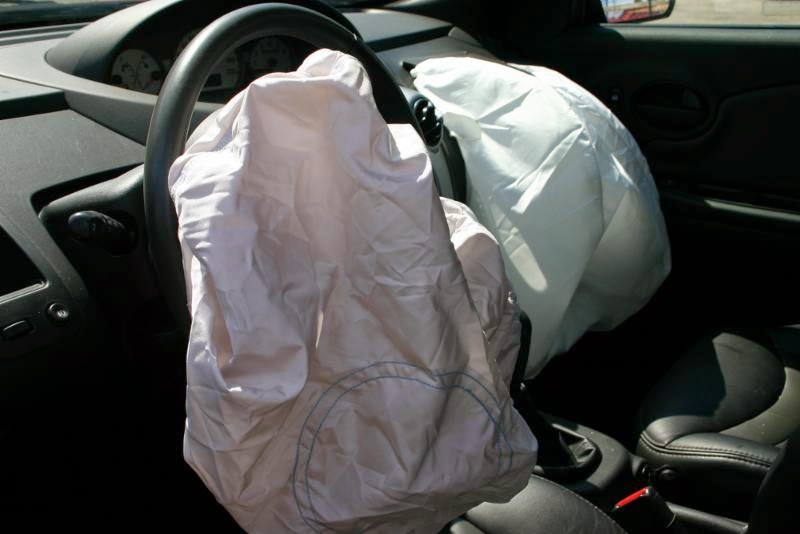
Airbag Defect Leads to Largest Auto Recall in US History

Hunter Insurance is committed to keeping policyholders informed on the latest news that could affect your safety. 

If you remember, last year the Japanese company Takata Corporation issued a recall of approximately 34 million vehicles due to faulty air bags. This is the largest auto recall in our country's history, with Takata airbags already linked to 10 known deaths in the U.S. and 11 worldwide, with over 100 injuries.

The issue is that the chemical that inflates the air bags can explode with too much force, blowing apart a metal inflator and sending shrapnel into the vehicle. Eleven automakers, including Honda Motor Co. and Toyota Motor Corp., have recalled 17 million vehicles in the U.S. and more than 36 million worldwide because of the problem.

According to SafeCar.gov, the manufacturers include:
  • BMW 
  • Chrysler 
  • Daimler Trucks 
  • Ford 
  • General Motors 
  • Honda 
  • Mazda 
  • Mitsubishi 
  • Nissan 
  • Subaru 
  • Toyota 
The National Highway Traffic Safety Administration (NHTSA) has created some online resources to help consumers whose vehicle may have a defective air bag made by Takata. 

The list of affected vehicles by priority group for repairs can be found: here.

How to Check

The NHTSA recommends people enter their Vehicle Identification Number (VIN) at this website: https://vinrcl.safercar.gov/vin/.

Should you have any additional questions please call Hunter Insurance at 769.9500.

Tuesday, May 12, 2015

Are You Aware of This New Law?


At Hunter Insurance, we are committed to keeping you informed to ensure your safety. With many rainy days certain to happen this Spring, we would like to remind you of the new windshield wiper law in Massachusetts.

As of April 7th, the new law requires drivers to have their headlights on if their windshield wipers are in use. It was put into effect as a way to increase visibility of other vehicles during inclement weather and to prevent accidents. The law also makes it mandatory to use your headlights thirty minutes before sunrise, and after sunset. Drivers should note that this law includes the use of both headlights and taillights.

Please keep in mind that this law is already in effect in Rhode Island and Connecticut. Although this is only considered a minor violation, driving with these types of instances on your record could have a future impact on your insurance premium.

Please call us at 769.9500 if you have any questions or would like to review your current auto insurance policy.

Monday, June 9, 2014

Teen Drugged Driving: The Scope of the Problem


Americans are well aware of the terrible consequences of drunk driving and are familiar with the many successful drinking and driving awareness campaigns. With the dramatic increase of handheld phones and personal devices, campaigns and laws targeting talking or texting while driving have also gained prominence. Yet an often overlooked issue, especially among teens and young adults, is drugged driving.

A nationally representative survey by the National Highway Traffic Safety Administration (NHTSA), found that in 2007, approximately 1 in 8 weekend nighttime drivers tested positive for illicit drugs. Worse yet, a 2010 study by NHTSA revealed that 1 in 3 fatally injured drivers, who were tested for substance use and the results known, tested positive for an illicit drug or medication with the ability to impair at the time of the crash. 

The risks are even greater for teens, who, due to their inexperience, are already more likely to be involved in a crash compared with more experienced drivers. When this lack of experience is combined with the use of substances that may alter perception, cognition, reaction time, and other faculties, the results can be tragic.

The statistics are alarming regarding drugged driving in the teenage demographic. Among high school seniors in 2011, approximately 1 in 8 reported that in the two weeks prior to the survey interview they had driven after smoking marijuana – more than reported driving after consuming alcohol. Across age groups, the rate of driving under the influence of illicit drugs in 2011 was highest among young adults aged 18 to 25 at 11.6 percent.

At Hunter Insurance, our main priority is ensuring the safety of you and your loved ones. For more information on how you can help protect your family, call Hunter Insurance at 401.769.9500.

Wednesday, May 7, 2014

Insurance Rates Improving for Older Drivers

You might be surprised to learn that today’s drivers aged 70 and over are much more cautious and are less prone to accidents than previous generations.  According to a study by The Insurance Institute for Highway Safety, older drivers are less likely to be involved in crashes and are less likely to be killed or seriously injured if they do crash.

Due to the fact that cars are technologically getting safer and seniors today are generally healthier, the growing age of baby boomers have been making roads safer since the mid 90’s. The study found that from 1997 to 2012, fatal crash rates per licensed driver fell 42 percent for older drivers and 30 percent for middle age ones.  While also accounting for miles traveled, fatal crash rates fell 39 percent for older drivers and 26 percent for middle age ones from 1995 to 2008.

In compliance with these statistics, older drivers are putting more miles on the odometer than they used to, although they are still driving fewer miles a year than middle-aged drivers. This is especially true for drivers 75 and older, who lifted their average annual mileage by more than 50 percent from 1995 to 2008.

Call Hunter Insurance today at (401) 769-9500 to discuss your current rates and to learn about possible credits you may be entitled to.   


(Source of information - Associated Press)

Monday, February 24, 2014

Pothole reimbursement in the State of Rhode Island

Potholes are the inevitable result of winter and early spring moisture and the freeze-thaw cycle. Due to the abundance of water seeping into the pavement, freezing and then expanding, cracks are created in the asphalt. While potholes are very common this time of year, it seems the Rhode Island roads are worse than ever.

When you’re driving down the road and hit a pothole that results in damage to your car, did you know the state or city in which the incident occurred could reimburse you for the damages?  In fact, if it occurred on a state road the Rhode Island Department of Transportation (RIDOT) will pay for up to $300 worth of damage, if your claim is approved.

In order to be properly reimbursed for pothole damage you must follow the steps below and always remember, timeliness is important.

1. Within 7 days of the incident, the registered vehicle owner must submit a letter to RIDOT stating the exact time, date, and location of the incident.

  • The letter must be post marked or received within 7 calendar days of the incident.
2. You have up to 60 days to provide the following:

  • A copy of a police report, a tow receipt or an auto club report verifying the incident
  • A copy of the valid RI registration for the vehicle
  • Copies of itemized, paid receipts with a proof of payment provided and the current odometer reading must be on the repair bill

If the damage occurred on an Interstate highway, and your car was not disabled or you do not have a tow receipt or auto club report, often times the State Police is the correct agency from which motorists should seek a pothole incident report form.

There are no guarantees with any claim made to RIDOT, and the pothole claim law only applies to cars registered in Rhode Island. The pothole law is only effective for non-residents if their vehicle is registered in a state that has a reciprocal pothole law – meaning that such a state would afford similar protections to Rhode Island-registered vehicles in its state.

If you decide to file a claim with your auto insurance company, pothole damage can only be covered if you have collision insurance and your collision deductible would apply.  If possible, take pictures of the damage to your vehicle and the pothole, if it is safe to do so, to help process the claim.

For more information on filing a claim through your insurance provider or with the state please call Hunter Insurance at 769-9500.


For filing claims in Massachusetts, call massDOT at 877-623-6846 or visit www.massdot.state.ma.us.

For filing claims in Connecticut, call connDOT at (860) 594-2000 or visit www.ct.gov/dot.

RIDOT Rules and Regulations for Pothole Claims

For more information on filing a claim with RIDOT visit www.dot.ri.gov/faq/claiminfo.asp


Tuesday, September 24, 2013

School Bus Safety


This is an excerpt from the article “School Bus Safety” published by the National Highway Traffic Safety Administration.


Taking the bus for the first time is a big step for your child. School buses are the safest mode of motorized transportation for getting children to and from school, but injuries can occur if kids are not careful and aware when getting on and off the bus.


Help your kids get a gold star in bus safety by following these tips:
  • Walk with your kids to the bus stop and wait with them until it arrives. Tell kids to stand at least three giant steps back from the curb as the bus approaches and board the bus one at a time. 
  • Teach kids to wait for the bus to come to a complete stop before getting off and never to walk behind the bus. 
  • If your child needs to cross the street after exiting the bus, he or she should take five giant steps in front of the bus, make eye contact with the bus driver and cross when the driver indicates it’s safe. Teach kids to look left, right and left again before crossing the street. 
  • Instruct younger kids to use handrails when boarding or exiting the bus. Be careful of straps or drawstrings that could get caught in the door. If your children drop something, they should tell the bus driver and make sure the bus driver is able to see them before they pick it up. 
  • Drivers should always follow the speed limit and slow down in school zones and near bus stops. Remember to stay alert and look for kids who may be trying to get to or from the school bus. 
  • Slow down and stop if you’re driving near a school bus that is flashing yellow or red lights. This means the bus is either preparing to stop (yellow) or already stopped (red), and children are getting on or off. 

At Hunter Insurance we value our children’s safety more than anything, and we are dedicated to keeping you and your family safe and protected. If you have any questions on safe driving or how to better keep your family protected call Hunter Insurance today at 401-769-9500.

For more info, please visit www.safekids.org.

Monday, July 15, 2013

Protect Yourself While Driving In Another Country


Planning on driving in another country?

If your travels take you out of the country, Hunter Insurance would like to remind you that your auto insurance policy covers you only while driving in the United States, its territories or possessions, Puerto Rico and Canada.  It DOES NOT cover you while driving in any other country including Mexico.

While your auto insurance policy covers you while driving in Canada, you must obtain a Canadian Auto Insurance Card from our agency before you leave on your trip. 


Also, all travelers to Canada including United States citizens 16 years of age or older, are required to have a passport or other travel documents approved by the Department of Homeland Security.  United States citizens under the age of 16 are able to present the original or copy of their birth certificate, or other proof of citizenship such as a naturalization certificate or citizens card. 

If you would like more information on properly maintaining insurance protection when you travel, call Hunter Insurance at 769.9500.


Friday, April 5, 2013

Insuring Your New Car

When cost-conscious consumers shop for new vehicles, they mostly concentrate on price and fuel economy. However, the cost of owning a vehicle goes beyond just these two factors. Aside from maintenance costs, consumers should focus on how much it will cost to insure the automobile.

Consumers should also not assume that the lower-cost cars are necessarily cheaper to insure than luxury brands. Insurance companies take a number of factors into consideration, including to what extent an automobile is likely to be damaged in a crash, how likely drivers and passengers are to be injured in crashes, and how often the vehicle is stolen.

It may pay to check how much it will cost to insure a car before purchasing it.

NOTE: According to the National Insurance Crime Bureau’s annual “Hot Wheels” list of the most frequently stolen cars in the United States, the 1994 Honda Accord was the most stolen car during the 2011 calendar year.

Tuesday, December 11, 2012

Getting Back on the Road

If your auto insurance policy has lapsed, you should not drive uninsured. If the policy lapsed as a result of missing a payment, it’s best to contact your insurer directly to see if you can be reinstated immediately. Otherwise, going even a short time without coverage will place you in a higher risk category, which means that your premiums will spike.

In some cases, such as if you were in the military and stationed overseas or you have been in the hospital for an extended stay, you may be spared rate increases. If not, the best way to shop for a policy is to enlist the help of an independent insurance agent, who can take your specific circumstances into consideration.

Note: If you decide to cancel your auto insurance policy because you will no longer be driving, contact your insurance agent and find out how to cancel your policy officially.

Monday, September 24, 2012

Certain Events Should Trigger Changes in Coverage

September is inevitably a busy month. School, soccer practice and homework make schedules a little more hectic. While you’re in the organizing and planning mode of the challenging Fall season, consider the changes in the past year that may make it necessary to alter your insurance coverage. It is wise to contact your independent insurance agent at Hunter Insurance if, in the past year, you:
  • Bought a new home, whether it’s your main domicile, a vacation home or rental property. 
  • Purchased a new or used automobile. 
  • Purchased a boat, recreational vehicle or motorcycle. 
  • Are the parents of a teenager who obtained a driver’s license and is allowed to drive the “family” car. 
  • Received or purchased an expensive piece of jewelry. 
  • Received or purchased an antique of any sort, including household items and coins. 
  • Started planning and paying for a wedding. 
  • Completed major renovations or an addition to your house. 
  • Had (and will continue to have) a dependent that is living away from home to attend college. 
  • Got married or divorced. 
  • Welcomed a new child or grandchild. 
  • Had significant changes in your health or that of your spouse or domestic partner. 
  • Took on the financial responsibility of an aging parent. 
  • Refinanced your home. 
As you gear up for fall, take a moment to organize your insurance coverage. Please call Hunter Insurance at 401-769-9500 if you have questions about your insurance.

Thursday, September 6, 2012

Don’t Overlook Rental Care Coverage When Purchasing Car Insurance

When most people think about car insurance, it’s the cost of collision repair, medical bills, or their own liability in an accident that worries them most. What they tend to overlook is the need for their car in the first place. If your car is in the shop getting fixed how are you going to get around?

Most people assume that they already have rental car coverage, when in fact many do not have it.

Other than the obvious convenience that comes with it, the best part about substitution transportation is how cheap it is. Per day coverage at $15 will cover much of the cost of a rental car and the coverage runs at only about $12 a year. Coverage at $30 a day is also available, but the annual cost is a bit higher, about four times as much as a $15-a-day plan.

For some people, a rental car may not be the best option, especially for drivers under 25 or anyone with a poor driving record that may make a rental car company reluctant to rent to them. But that doesn’t mean Substitute Transportation isn’t for you: it can also cover the costs of bus and rail transportation as well as cab fares.

We’ve found that after filing a car insurance claim almost all people correctly buy Substitute Transportation or increase their overall coverage. Save yourself the trouble and start out with full coverage from the get-go.

For more information about your auto insurance, call Hunter Insurance at 401-769-9500.

Friday, April 20, 2012

Helping Teenage Drivers

There are several things parents can do to help keep their teenagers safe behind the wheel this summer. Here are a few tips.
      Coach your Son or Daughter. You should “coach” your teenage driver. Talk openly and frankly with him or her in order to determine his or her attitude about being behind the wheel. Work with your teen to set ground rules, such as the number of people allowed in the car, where the car may be taken, and curfew.
      Utilize Emergency Road Service. If you do not belong to a motor club, you should consider joining one that provides 24-hour emergency road service. That way, your teenager may call for help at any time if they need gas, need a jump-start, are locked out, or need a tire changed. You can also arrange with the motor club to provide service for your teen if they are in a friend’s car.
      Have an Open Discussion about Driving under the Influence. While no one wants to think about the possibility of their teenager drinking and driving—or being in a car with an impaired friend at the wheel—we need to be realistic. History has shown that teenagers will experiment with alcohol. You should make it clear to your teen that driving after drinking is not acceptable. However, if they ever do drink, or are in a car with someone else who is impaired, make it clear to your teen that he or she can call you at any time of the day or night and that you will come to get them—no questions asked.
Two other effective, though more costly, things that can be done are:
      Install a “Governor.” Many vehicles—school buses and certain types of delivery vehicles are good examples—have a “governor” installed in them that restricts the amount of fuel that can be injected, thus preventing the vehicle from being driven over a certain speed. A governor in your teen’s car may help keep him or her within the speed limits.
      Install a Global Positioning System (GPS) in your car. You can program it to let you know where your teenager is driving at any time. With the GPS, you can set a radius of operation and the GPS will notify you if your teen has taken the car outside of that radius. It can even alert you when the speed limit is being exceeded. Finally, a GPS can notify you if the car is being kept out past an agreed upon curfew. We realize that this may seem like a rather extreme measure. Use of a GPS may best serve those parents who have a reason to mistrust their teenager.
When your son or daughter gets a drivers license, work with your insurance agent to review various options for both of you. It is important for you—and your son or daughter—to remember that, yes, your auto insurance rates will go up, but they will come down after a couple years of driving experience. However, the rates will really go up if your teenager has tickets or gets into accidents.
Wednesday, March 21, 2012

Why You Need Uninsured Motorists Coverage

Uninsured motorists (UM) coverage provides insurance protection for bodily injury, and in some states property damage, caused by a motorist who is not insured. This coverage allows you to collect from your own insurance company as if it provided liability coverage for the negligent and uninsured driver. In contrast, underinsured motorists (UIM) coverage provides insurance protection for bodily injury, and in some states property damage, sustained by you when a motorist who is not sufficiently insured negligently causes an accident. The following list provides reasons why you should buy UM/UIM coverage.

  • The chance of a negligent uninsured motorist hitting you is greater than you might think. In some states, up to 32 percent of all drivers lack automobile insurance. The country-wide average is 14 percent.
  • UM and UIM coverage is broad, since it provides benefits for you and your family members’ injuries sustained (a) in your own covered auto, (b) in autos you do not own, and (c) as pedestrians.
  • The cost for this coverage is very reasonable, compared to liability coverage and physical damage coverage for your own car. The increased costs for higher UM/UIM limits are quite affordable for most people.
  • If your car is damaged by an uninsured driver, the deductible for UM property damage, if available in your state, is normally only $250. This amount is often considerably less than your collision coverage deductible.

If you have further questions about uninsured motorist coverage, please call Hunter Insurance at 401-769-9500.

Tuesday, November 16, 2010

Pursue Those Auto Insurance Discounts

One way to avoid paying too much for your personal automobile insurance is to assure you are getting all the discounts you deserve. The following are discounts you should inquire about. Some may not be available in all states and from all insurers, but it doesn’t hurt to ask. These discounts may significantly affect your insurance premium.
  • “Defensive Driving Discount.” This discount can save you 10 percent on most of the major coverages under your auto policy, such as liability, medical payments, and collision coverage. Defensive driving courses can cost as little as $20 and last as few as 5 or 6 hours. However, the discount normally applies for 3 years. For example, if your auto insurance premium is $100 per month, the premium is $3,600 for 3 years. If liability, collision, and medical payments or personal injury protection coverage constitute 85 percent of this $3,600 premium, the resulting premium subject to this discount is $3,060. In this scenario, the actual premium savings would be $306 (10 percent of $3,060) for that
  • 3-year period. To get the true savings, you must deduct the cost of the defensive driving class. If the cost is $26, the savings in this example would be reduced to $280. If you spend 6 hours taking the class, you are earning $47 per hour in savings—not an unproductive way to spend a Saturday!
  • “Good Student Discount.” Statistics show that good students tend to be more reliable and mature than students with marginal grades, leading to better driving decisions. Therefore, many states allow a 5 to 10 percent discount if your student driver makes good grades, usually an overall “A” or “B” average in high school or college. If your child has to pay his or her own automobile insurance, this will be another motivator for him or her to make good grades.
  • “Home/Car Discount.” Many insurers offer discounts of 10 percent or more if they pro-vide both your homeowners and personal automobile insurance. This can lower your costs on both policies.
  • “Auto Safety Features.” Most insurers recognize that owners with cars containing safety features may have fewer accidents and reduced injuries. Many insurers encourage drivers to purchase cars with antilock brakes by giving small discounts for these safety features. Other insurers give discounts for vehicles with airbags and daytime running lights.
  • “Auto Club and Professional Organizations.” Some insurance companies offer auto insurance discounts if you are a member of AAA or similar organizations.
  • “Multicar.” Many insurance companies provide generous discounts up to 15 percent if you have multiple cars on your policy. This reduces the insurance company’s administrative costs, on a per-vehicle basis, in issuing the policy.
  • “Long-Term Customer.” More insurance companies are offering discounts of 5 to 10 per-cent if you stay with them at least 5 years.
  • “Claims-Free Customer.” If you have been insured with the same insurance company for at least 3 years and have not experienced any losses, inquire about a claims-free customer discount. These discounts help insurers retain customers with excellent driving records.

share

Get widget